There is a specific kind of frustration that comes from paying to have a drain cleared, watching it work perfectly for four months, and then standing in ankle-deep shower water again. If that is your situation, the problem is not the clog. The problem is whatever keeps producing the clog, and nobody has looked for it yet.
Cabling a line punches a hole through a blockage and pulls back what it can grab. That is genuinely the right answer for a one-off hair jam or a kid's toy. It is the wrong answer for a pipe with a structural issue, because the structural issue is still there the moment the water starts flowing again.
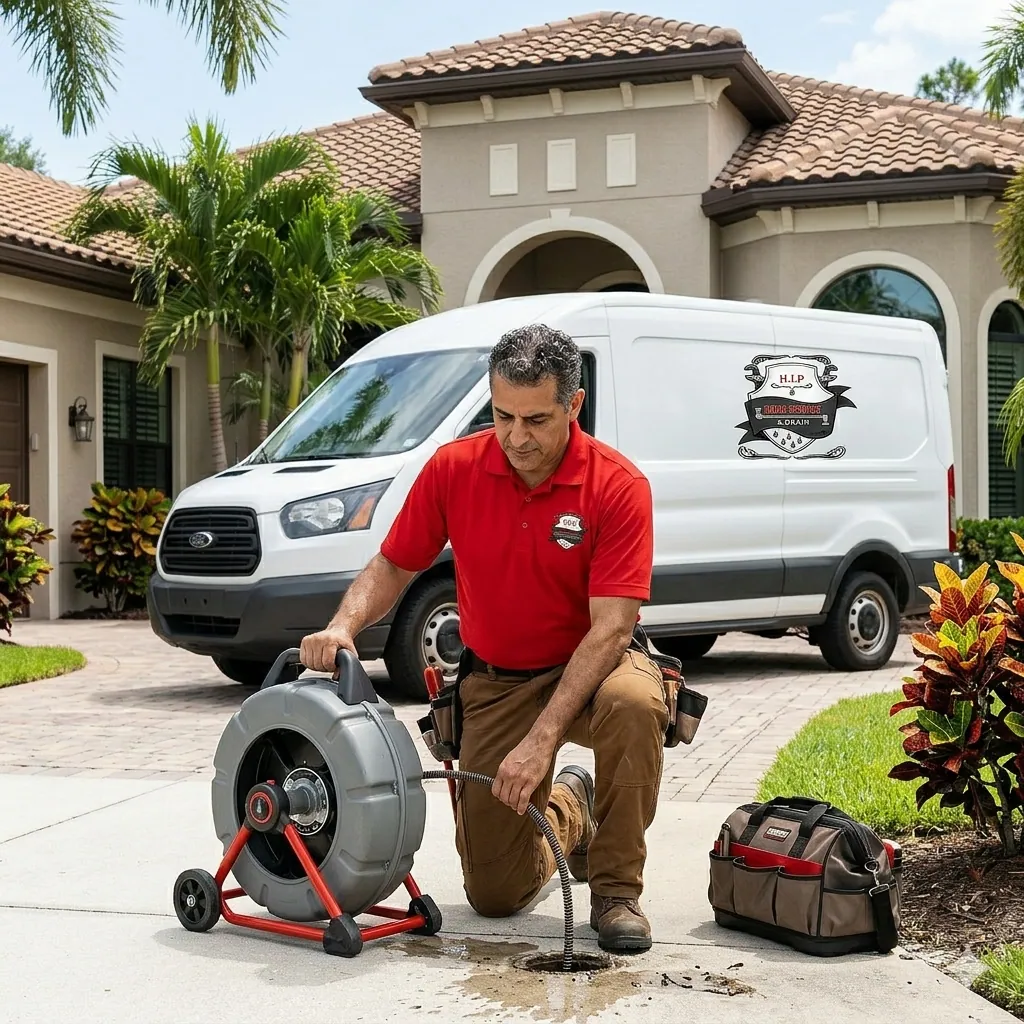
Cause 1: Grease Is Coating the Pipe, Not Passing Through It
Cooking grease goes down the drain as a liquid and cools into a solid within a few feet. It coats the pipe wall, catches food particles, and builds up in layers like plaque in an artery. A line that started at four inches can narrow to under two before anything backs up.
A cable bores a channel through that buildup and the drain works again — but the pipe is still coated, and the channel closes back up. Only hydro jetting actually removes it, by scouring the wall back to full diameter with 3,000 to 4,000 PSI of water.
Cause 2: Tree Roots Found a Joint
This is the number one cause of repeat main line clogs in Dade City, and the mature live oaks around the historic district, Saint Leo and Lacoochee are the reason. Roots seek moisture. Older clay and cast iron laterals have joints that loosen as the ground settles. A hairline gap that weeps a little water is an invitation.
Once inside, roots grow into a mesh that catches everything passing through. Cutting them out buys 12 to 24 months, then they regrow from the same point. Ending it permanently means lining the pipe or replacing that section — see our sewer line page for what each involves.
Cause 3: A Belly in the Line
A belly is a section of pipe that has sagged below grade, usually from soil settling under it. Water pools there instead of flowing through, solids drop out of suspension into the standing water, and the pipe silts up from the bottom.
Bellies are the most misdiagnosed drain problem there is, because the symptom — a line that clogs every few months in the same spot — looks exactly like a grease problem. A camera settles it in ten minutes. If you see standing water in a horizontal run with no blockage in front of it, that is a belly, and no amount of cleaning will fix it. The pipe has to be re-graded.
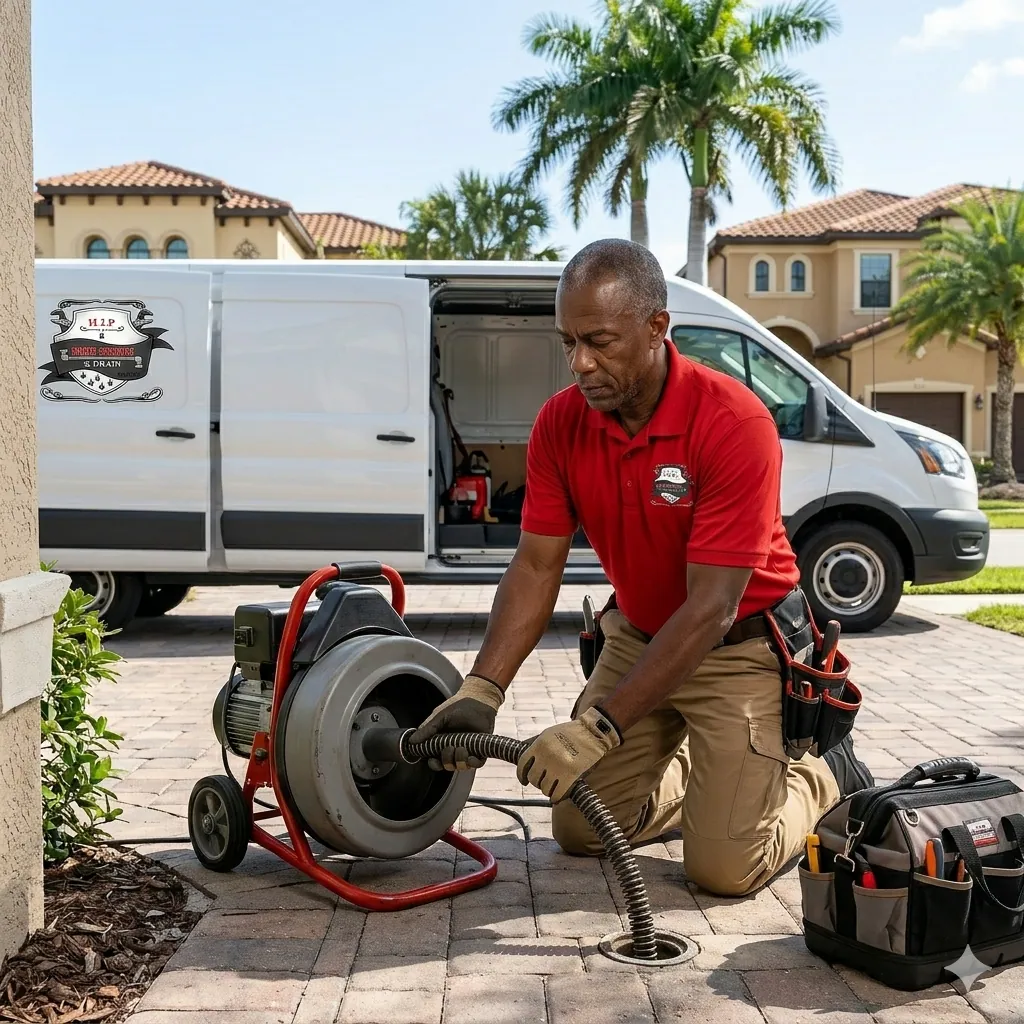
Cause 4: Scaled and Channeled Cast Iron
Cast iron drain lines were standard in Dade City homes into the 1970s and they do not fail gracefully. The interior corrodes and builds up a rough scale that grabs paper and debris. Eventually the bottom of the pipe channels out entirely, leaving a rough trough instead of a smooth round bore.
Combined with hard aquifer water, which adds mineral scale on top of the corrosion, older cast iron effectively becomes a strainer. This is why houses near the courthouse square have drain problems that newer homes across town simply do not.
Cause 5: Wipes, and Everything Else Labeled Flushable
They are not flushable. "Flushable" wipes pass through the toilet and then stop, because they do not break down the way toilet paper does. They catch on any rough spot, root or scale in the line and become the nucleus of the next blockage. Paper towels, cotton products, dental floss and cat litter do the same thing.
If a line has any pre-existing issue, wipes will find it. Many of the "random" main line clogs we clear turn out to be a wad of wipes hung up on a root intrusion that had been quietly tolerable for years.
Cause 6: Venting That Is Not Doing Its Job
Every drain system needs air behind the water or it drains slowly and gurgles. If you hear a toilet bubble when the washing machine empties, or a tub gurgle when a sink drains, air is being pulled through the trap because it cannot get through the vent. Blocked vents — leaves, nests, a critter, or a builder who undersized the stack — cause slow drains that no amount of cabling improves.
How to Actually End It
Get a camera in the line. Everything above is diagnosable in one inspection, and it is the difference between paying for a solution and paying repeatedly for a symptom. Ask for the footage — you should see what your plumber sees.
Then match the fix to the cause. Grease gets jetted. Roots get cut and then lined or repaired. A belly gets excavated and re-graded. Scaled cast iron gets jetted carefully or replaced. Vent problems get cleared. And if a company recommends replacement without showing you why, ask a second one.
What About Chemical Drain Cleaners?
They are worth understanding because so many people reach for them first. Caustic and acidic cleaners work by generating heat to dissolve organic matter, and on a partially open drain with a hair clog close to the opening they sometimes work.
On a fully blocked line they do not. The chemical sits on top of the blockage in standing water, heats up, and attacks whatever it can reach — which is the pipe, the rubber gaskets in the P-trap, and the joints. On older cast iron it accelerates corrosion that is already well underway. It also turns the standing water into something genuinely hazardous for whoever opens the line next, which is why plumbers ask before reaching into a trap.
If a plunger has not moved it in a couple of minutes, stop and call. The cost difference between a standard clog and a chemical-damaged pipe is not close.
For prevention: keep grease out of the kitchen line, use a hair catcher in every shower, never flush anything but waste and toilet paper, and schedule a maintenance cleaning every 12 to 18 months if your home is older or your lot has big trees. That last one costs a fraction of one emergency callout.
Need this handled instead of researched?
Licensed, insured, same-day service across Dade City and Pasco County. Free written estimate, honored 30 days, and we beat any written quote from a licensed competitor.
CALL 813-733-7188Repeat Drain Clog FAQs in Dade City
Every 12 to 18 months for most homes, and annually if you have older clay or cast iron lines, mature oaks near the lateral, or a household of five or more. Restaurants and commercial kitchens should be on a quarterly schedule.
No. A slow drain with gurgling usually means a venting problem, not a blockage — air cannot get in behind the water so it pulls through the trap instead. Slow drainage across several fixtures at once points at the main line rather than any one fixture.
Cutting roots clears them for 12 to 24 months, then they regrow through the same joint. The permanent fixes are trenchless lining, which seals the pipe from the inside, or excavating and replacing that section. Anything else is maintenance, not a cure.
Because the blockage is downstream of both. When a large volume of water hits a restricted main line it forces air back up the nearest opening, which is your toilet. That symptom is a main line problem and it usually gets worse fast.
They do different jobs. A cable punches through a blockage; a jetter scours the pipe wall back to full diameter. For hair and single-fixture clogs a cable is the right tool. For years of grease, scale or fine roots, only jetting actually removes the buildup.